 A Lean Journey
 About Me
- Home
- About Me
About — A Lean Journey
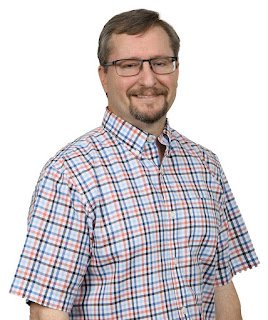
Tim McMahon
Lean implementation leader, author, and Six Sigma Black Belt with 25+ years helping manufacturers see waste, solve problems, and build people who can do both.
Background
Trained by disciples of the Toyota Production System, in a Shingo Prize–winning facility.
Tim McMahon is a Lean implementation leader, author, and blogger. As a Lean practitioner, Tim brings more than 25 years of leadership experience implementing Lean manufacturing. Trained by disciples of the Toyota Production System, he worked in a Shingo Prize–winning facility. He has held a number of leadership positions within operations management, Lean, and quality disciplines of innovative high-tech manufacturing companies. Tim has a passion for teaching problem-solving skills, Lean philosophy, and quality improvement methods by actively learning, thinking, and engaging people.
By drawing on his knowledge and experience, Tim co-authored The Lean Handbook: A Guide To The Bronze Certification Body Of Knowledge (ASQ Quality Press) in 2012 — a single reference guide covering the Lean certification programs of SME, AME, ASQ, and the Shingo Prize.
He is a member of the American Society for Quality (ASQ) and took part in the ASQ Influential Voices program — quality professionals and online influencers who raise the voice of quality on their own blogs. Tim also served on the regional Board of Directors for the Association of Manufacturing Excellence (AME).
He holds a Lean Certification and Six Sigma Black Belt from Central Connecticut State University, a Lean Bronze Certification from the Society of Manufacturing Engineers, a Master Lean Six Sigma Black Belt from the Management and Strategy Institute, and is a Shingo Institute Alumni.
Tim and his wife live in Massachusetts with their three children. He has a passion for ice hockey and serves on the executive board of Massachusetts Hockey as Secretary. He has held the role of President for the Greater Springfield League, Director of Communications for Westfield Youth Hockey, and is currently a Level 5 recognized USA Hockey Coach.
Five Questions
A short conversation on how Tim found Lean, and what still fuels the pursuit of it.
Who are you, what organization are you with, and what are your current lean-oriented activities?
I am the founder and contributor of A Lean Journey Blog — a site dedicated to sharing lessons and experiences along the Lean Journey in the quest for True North. Since I believe you should practice what you preach, my day job is a Lean practitioner leading continuous improvement efforts for OFS, a high-tech manufacturer of fiber optic cables and assemblies with several plants in the Northeast. A major focus right now is teaching problem-solving skills, Lean countermeasures, and how to see opportunities for improvement by actively learning, thinking, and engaging our workforce.
I've also supported the AME Northeast Region Board of Directors as the Social Media Lead, helping identify how to best leverage tools like LinkedIn, Twitter, SlideShare, YouTube, and Facebook to grow networking within AME's Northeast Region.
How, when, and why did you get introduced to lean, and what fuels the passion?
After coming from a research and development role into an operations role, I discovered Lean. In 1999 I started learning what Lean manufacturing was all about, and I have been learning about it ever since. In the beginning, Lean was a way to meet operational objectives; now I've found it's a profound way of thinking that encompasses everything I do — the best business performance system I've seen. My passion is fueled by those wonderful "a-ha" moments, when hours of study and thought finally fall into place, and by the people I've met going down a similar journey of their own.
In your opinion, what is the most powerful aspect of lean?
Murphy's Law states that anything that can go wrong will go wrong — there isn't an organization that doesn't face problems. For me, the most powerful aspect of Lean is being able to solve those problems scientifically: the four-step PDCA cycle popularized by Dr. Deming. My engineering background built a foundation of hypothesis, experiment, and evaluation, so this feels natural. Nearly all of Lean's thinking processes are rooted in this same problem-solving process.
"Having no problems is the biggest problem of all." — Shigeo Shingo
In your opinion, what is the most misunderstood or unrecognized aspect of lean?
Most people who try Lean in their organization fail to fully understand the people side of it. Lean, commonly known by its origin as TPS, is really the "Thinking People System" to me — learning to see waste and solve problems through the development of people, not tools. As in the namesake of my blog, "A Lean Journey — The Quest for True North," Lean is not about the destination but the direction you take toward it. It's not something you check off a to-do list; it's the constant, persistent pursuit of improving your current situation, which brings you to the next current state, and so on. Waste is all around us, yet many can't recognize it — activity does not equal productivity. The real challenge is to break the status quo and learn to truly "see": observing the actual condition, at the actual place, at the actual time.
"Lean is 90% people and 10% tools." — Bruce Hamilton, President, GBMP
What is the biggest opportunity for lean in today's world, and how can it be accomplished?
The biggest opportunity is in our service industries. Lean has a proven track record across manufacturing, but we all encounter poor service, higher costs, and more waiting every day when we interact with businesses. Lean Healthcare has been a dominant theme for years, with strong examples to point to. Lean Government is moving forward too, with an early start from the EPA and legislation such as Connecticut's effort to use Lean techniques in state government. Lean focuses on process, has a measurable impact on time, capacity, and customer satisfaction, and involves every employee — a formula that can help many more organizations succeed.
Noteworthy Recognitions
Independent lists that have placed A Lean Journey among the field's leading resources.
Connect
Follow along or reach out directly.
The content within this blog represents my opinion, not that of my employer or anyone else. I'm part of the ASQ Influential Voices program; while I receive a small honorarium from ASQ for my commitment, the thoughts and opinions expressed on this blog are my own.
I currently have or had financial relationships with other individuals or organizations that might be mentioned on the blog: Lean Enterprise Institute, Creative Safety Supply, McGraw-Hill Publishing, Enna, LeanKit Enterprise Kanban, and Straight North. Other advertisements may be presented by the Google AdSense program. Links to Amazon.com are affiliate links, for which I am paid a commission on purchases. These disclosures are in the interest of meeting FTC .com disclosure guidelines.