 A Lean Journey
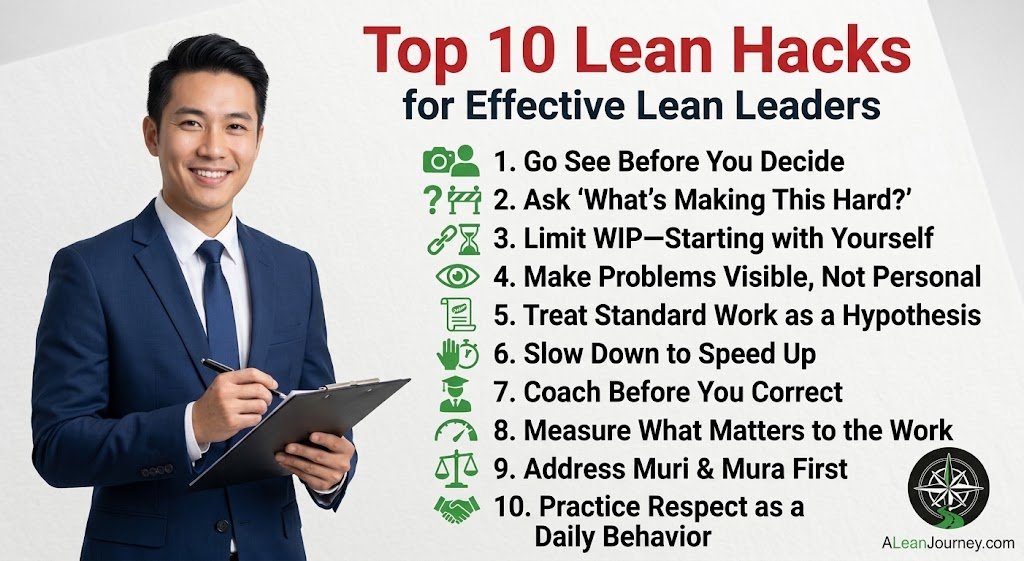 Lean management isn’t about having all the answers—it’s about creating the conditions where the best work can happen. Yet many Lean managers find themselves overwhelmed, reacting to problems instead of leading improvement, and stuck translating Lean theory into daily practice.
The good news? Small shifts in how you lead can create outsized impact. These “hacks” aren’t shortcuts or gimmicks. They’re practical habits grounded in respect for people, continuous improvement, and real-world experience—simple adjustments that make Lean easier to live, not just talk about.
- Go See Before You Decide
Resist the urge to solve problems from a conference room or dashboard. Decisions made without firsthand understanding often create more waste. Visiting the gemba builds context, credibility, and better judgment.
- Ask “What’s Making This Hard?”
Instead of asking why someone failed, ask what made the work difficult. This shift uncovers system barriers rather than assigning blame. Most problems live in processes, not people.
- Limit Work-in-Process—Starting with Yourself
Overburden (Muri) kills improvement. When everything is a priority, nothing improves. Model focus by limiting your own commitments and helping teams finish work before starting new tasks.
- Make Problems Visible, Not Personal
A good Lean manager doesn’t hide issues to look good. They surface them early so learning can happen. Visual management should reveal problems, not protect egos.
- Treat Standard Work as a Hypothesis
Standard work isn’t a rigid rule—it’s today’s best-known method. Encourage teams to follow it, test it, and improve it. This mindset keeps standards alive instead of ignored.
- Slow Down to Speed Up
Rushing often creates rework, confusion, and burnout. Taking time to clarify purpose, roles, and expectations upfront prevents downstream waste. Calm leadership creates faster flow.
- Coach Before You Correct
When something goes wrong, resist fixing it yourself. Ask questions that help others think through the problem. Teaching problem-solving builds capability and reduces dependency on you.
- Measure What Matters to the Work
If metrics don’t help teams improve daily work, they’re just noise. Focus on measures that reflect flow, quality, and customer impact. Good metrics should drive learning, not fear.
- Address Muri and Mura Before Chasing Muda
Eliminating waste (Muda) without stabilizing workload (Mura) and overburden (Muri) is a common Lean trap. Start by creating balance and sustainability—waste reduction will follow naturally.
- Practice Respect as a Daily Behavior
Respect for people isn’t a slogan—it’s how you listen, respond, and show up under pressure. Trust grows when leaders are consistent, curious, and humble. Culture changes one interaction at a time.
Final Thoughts
Lean leadership isn’t about heroic effort or perfect execution. It’s about creating clarity, reducing friction, and developing people through everyday actions. These hacks won’t replace deep Lean thinking—but they will help you apply it where it matters most: in the daily work.
Start with one. Practice it intentionally. Improvement doesn’t come from doing more—it comes from doing the right things, consistently.
Lean is simple. Leading Lean well takes practice.





Leave a Comment
Your email address will not be published. Required fields are marked with *