 A Lean Journey
 Managing daily work can quickly become overwhelming when priorities are unclear, and tasks pile up. Personal Kanban offers a simple yet powerful way to bring structure, focus, and flow to individual work by combining visual task management with clear work-in-progress limits.
This approach adapts Lean principles to personal workflows, making it especially effective for Kanban for personal productivity and Lean office productivity environments.
Why Personal Kanban Works for Knowledge Work
Traditional to-do lists often fail because they encourage overcommitment. In contrast, Personal Kanban is built on two foundational principles:
| Core Principle | Description |
| Visualize Work | Make all tasks visible so nothing is hidden or forgotten |
| Limit Work in Progress | Restrict how much work is actively being done at one time |
By applying these principles, individuals can reduce mental overload, improve focus, and complete work more consistently.
Rethinking Prioritization in Personal Productivity
Instead of ranking tasks by priority, Personal Kanban treats work as binary:
- Important tasks belong on the board
- Non-essential tasks are excluded entirely
This mindset removes false commitments and helps maintain clarity. If a task truly matters, it earns space on the board. If not, it no longer competes for attention.
Designing a Simple Personal Kanban Workflow
A basic Personal Kanban system can be created using four workflow stages:
| Workflow Stage | Purpose |
| Backlog | Captures all potential tasks |
| This Week | Defines planned work for the current week |
| Today | Shows active tasks with strict WIP limits |
| Done | Confirms completed work |
This structure supports visual task management while keeping planning lightweight and adaptable.
Establishing Effective Work in Progress Limits
One of the most important elements of Kanban for personal productivity is limiting how much work is active at any given time.
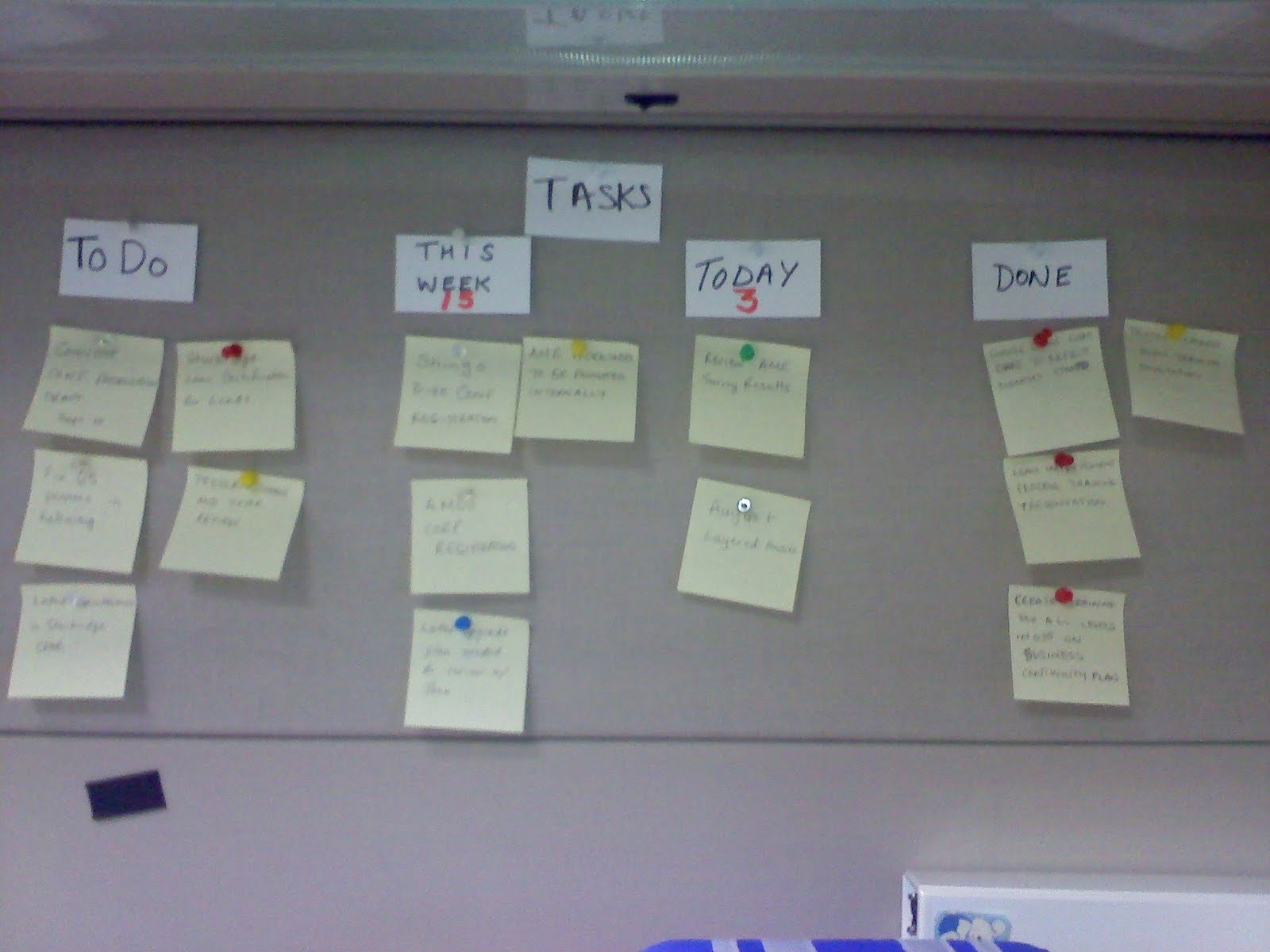
Unlike manufacturing, knowledge work varies in size and complexity. A single large task can consume as much mental energy as several small ones. Because of this, WIP limits should be based on capacity, not task count.
A practical starting point:
| Column | Suggested WIP Limit |
| Today | 3 tasks |
| This Week | 10–15 tasks |
These limits protect focus and encourage task completion before starting new work.
Using Pull Instead of Push
Rather than forcing tasks into your day, Personal Kanban encourages a pull system:
- Tasks move forward only when capacity becomes available
- Work flows naturally based on completion, not pressure
This aligns well with Lean office productivity principles and reduces the stress caused by multitasking.
Lessons Learned from Using Personal Kanban
After applying this system consistently, several insights often emerge:
| Observation | Practical Impact |
| Small tasks move faster | Encourages momentum and motivation |
| Large tasks need to be broken down | Improves flow and reduces stagnation |
| Weekly planning adds clarity | Prevents last-minute overload |
| Physical boards lack portability | Digital versions may be preferable |
| Color-coding improves visibility | Helps categorize work types easily |
For very small or quick tasks, a simple handwritten list may still be effective alongside the Kanban board.
Continuous Improvement Through Kaizen
Just like organizational Kaizen, Personal Kanban thrives on experimentation and refinement. Start simple, observe what works, and make incremental improvements.
Each adjustment strengthens your system, making Personal Kanban an evolving tool for better focus, clearer priorities, and sustainable productivity.
Summary Table: Personal Kanban at a Glance
| Element | Benefit |
| Visual task management | Immediate clarity of workload |
| Work in progress limits | Reduced multitasking and burnout |
| Kanban for personal productivity | Better control over daily output |
| Lean office productivity | Efficient use of time and attention |
| Continuous improvement | Long-term effectiveness |







Leave a Comment
Your email address will not be published. Required fields are marked with *