 A Lean Journey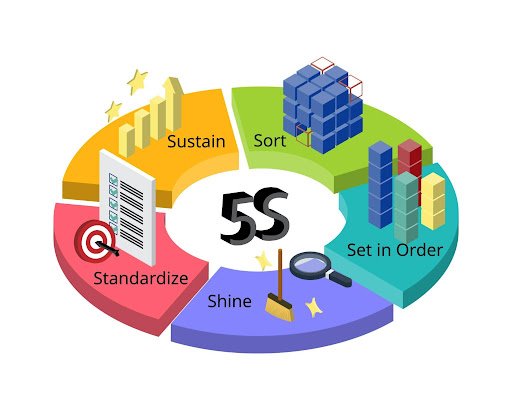
If you’re looking for a practical way to improve workplace organization, efficiency, and safety, 5S methodology is a strong place to start. Used widely in Lean environments, 5S provides a structured approach for organizing the workplace, maintaining standards, and creating better conditions for employees to perform their work.
Some organizations take the methodology one step further by adding Safety as a sixth element. This approach is commonly known as 6S, or 5S Plus Safety.
The concept is straightforward: organize the workplace, establish consistent standards, maintain those standards, and make safety part of the improvement process rather than treating it as a separate activity.
What Is 5S Methodology?
5S methodology is a workplace organization system built around five Japanese principles:
- Seiri — Sort
- Seiton — Set in Order
- Seiso — Shine
- Seiketsu — Standardize
- Shitsuke — Sustain
Together, these principles help organizations create workplaces where necessary items are easy to find, problems are easier to see, and employees have a clear understanding of how work areas should be maintained.
The goal isn’t simply to make a workplace look cleaner. Proper 5S supports efficiency, consistency, visual management, problem identification, and employee ownership.
The Five Principles of 5S
1. Sort
Start by separating what is necessary from what isn’t.
Unused tools, excess materials, obsolete equipment, and unnecessary items can create clutter and make it harder to find what employees actually need.
Ask:
- Is this item required for the work?
- How frequently is it used?
- Is there a better place to store it?
- Can unnecessary items be removed?
The objective is to keep the workplace focused on what is actually needed.
2. Set in Order
Once unnecessary items have been removed, organize the remaining items so they are easy to locate, use, and return.
Storage locations should make sense to the people performing the work. Labels, markings, visual controls, and designated locations can help employees quickly identify where something belongs.
A well-organized workplace reduces unnecessary searching, motion, and delays.
3. Shine
Shine involves cleaning and inspecting the workplace and equipment regularly.
Cleaning isn’t only about appearance. While cleaning, employees may discover leaks, damaged equipment, loose components, unusual conditions, or other problems that could affect safety or performance.
This makes cleaning an opportunity to inspect and identify abnormalities.
4. Standardize
After improvements have been made, establish consistent methods for maintaining them.
Standardization can include:
- Visual instructions
- Checklists
- Cleaning schedules
- Storage standards
- Workplace markings
- Inspection routines
- Standard work procedures
Clear standards help employees understand what the workplace should look like and how it should be maintained.
5. Sustain
The final S is about maintaining the improvements over time.
Without regular follow-up, workplaces can gradually return to their previous condition. Sustaining 5S requires leadership support, employee involvement, audits or reviews, and consistent reinforcement of standards.
The objective is to make workplace organization part of normal daily work rather than a one-time cleanup exercise.
What Is 6S in Lean Manufacturing?
6S in Lean manufacturing builds on the traditional 5S framework by adding Safety as the sixth S.
The additional step asks teams to examine the workplace and processes specifically from a safety perspective.
Rather than assuming that an organized workplace is automatically safe, employees deliberately look for potential hazards and unsafe conditions.
These may include:
- Trip hazards
- Blocked walkways or exits
- Improper material storage
- Unsafe equipment conditions
- Poorly positioned tools
- Chemical or material hazards
- Ergonomic concerns
- Inadequate visual warnings
- Unsafe work practices
The exact approach to 6S can vary between organizations, but the central idea remains the same: safety should be built into workplace improvement rather than added after the fact.
5S vs. 6S: What’s the Difference?
The primary difference is the explicit focus on safety.
| Approach | Core Focus | Main Objective |
| 5S | Workplace organization and standardization | Create an efficient, orderly, and sustainable workplace |
| 6S | 5S plus Safety | Combine workplace organization with systematic hazard awareness |
| 5S Plus Safety | Organization, standards, and safety | Make safety an integral part of continuous improvement |
Adding Safety doesn’t replace the original five principles. Instead, it expands the review of the workplace to include potential hazards and unsafe conditions.
Why 5S in Manufacturing Matters
5S in manufacturing can be especially valuable because production environments often involve tools, materials, equipment, inventory, and multiple work processes operating simultaneously.
A disorganized workplace can make it difficult to identify problems and may contribute to wasted motion, delays, misplaced materials, and inconsistent work practices.
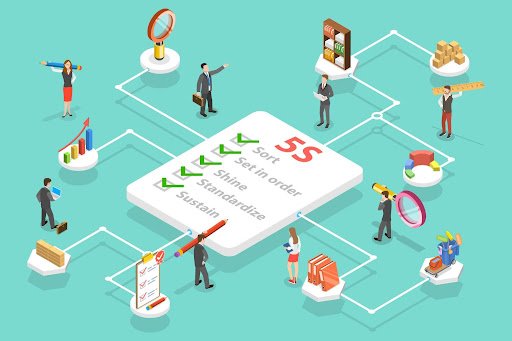
A well-designed 5S system can help employees:
- Find tools and materials more easily.
- Keep work areas organized.
- Identify abnormalities sooner.
- Reduce unnecessary movement.
- Maintain consistent workplace standards.
- Take greater ownership of their work areas.
- Make problems more visible.
The value comes from creating a workplace where the desired condition is clear, and deviations are easier to recognize.
How 5S Workplace Organization Supports Lean
5S workplace organization is closely connected to Lean because it creates the foundation for visual management and continuous improvement.
When everything has a defined location and standards are visible, abnormal conditions become easier to spot.
For example, if a tool is missing from its designated location, an employee should be able to recognize that immediately. If materials are stored outside marked boundaries, the deviation becomes visible.
This principle can be summarized simply:
When the standard is visible, abnormal conditions become easier to see.
That visibility allows teams to respond before small problems become larger ones.
How to Introduce 5S Plus Safety in the Workplace
Implementing 5S Plus Safety doesn’t have to begin with an entire facility.
Start with one work area and involve the employees who use it every day.
Step 1: Assess the Current Workplace
Walk through the area and document current conditions.
Look for:
- Unnecessary items
- Poorly organized tools
- Excess inventory
- Cleaning problems
- Missing standards
- Safety hazards
- Difficult-to-access materials
Step 2: Involve Employees
Employees should have an active role in deciding how the workplace should be organized.
They understand the process firsthand and can often identify practical improvements that aren’t obvious to someone unfamiliar with the work.
Step 3: Establish the New Standard
Determine where tools, materials, equipment, and other necessary items should be located.
Use visual controls where appropriate so employees can quickly recognize the expected condition.
Step 4: Add a Safety Review
Examine each step and workplace area for potential hazards.
Ask:
- Could someone trip or fall here?
- Is equipment being used safely?
- Are walkways and exits clear?
- Are materials stored securely?
- Could the workstation create an ergonomic problem?
- Can a hazard be eliminated rather than simply labeled?
Step 5: Sustain the Improvement
Create simple routines for maintaining the new condition.
Regular checks should focus on identifying problems and improving the system—not simply criticizing employees when standards aren’t met.
5S Should Be More Than a Cleanup Project
One common mistake is treating 5S as a large-scale cleaning exercise.
A cleaner workplace can certainly be a result of 5S, but cleaning alone isn’t the objective.
A successful 5S methodology should help an organization answer questions such as:
- What belongs in this area?
- Where should it be located?
- What should the normal condition look like?
- How do we maintain that condition?
- How will we recognize abnormalities?
- What can we improve?
When employees understand the purpose behind the system, 5S becomes a management and improvement practice rather than a temporary housekeeping campaign.
Make Safety Part of Everyday Improvement
The addition of Safety to 5S reinforces an important principle: workplace improvement should never come at the expense of employee well-being.
When teams review processes, they should consider safety alongside quality, productivity, cost, and delivery.
This encourages employees to identify hazards during normal improvement activities rather than waiting for an incident to reveal a problem.
A strong 6S culture makes safety visible, encourages employees to speak up about hazards, and supports continuous improvement in the workplace.
Final Thoughts
5S methodology provides a practical framework for organizing workplaces, establishing standards, making abnormalities visible, and developing employee ownership.
Adding Safety creates the 6S approach, bringing workplace hazard awareness directly into the improvement process.
Whether you call it 5S, 6S, or 5S Plus Safety, the underlying principle is the same: create a workplace where people can find what they need, understand how work should be performed, recognize abnormal conditions, and continuously improve the way work is done.
For manufacturers beginning their Lean journey, 5S in manufacturing can provide a simple but powerful foundation for workplace organization, visual management, employee involvement, and safer, more consistent operations.




Leave a Comment
Your email address will not be published. Required fields are marked with *