 A Lean Journey
 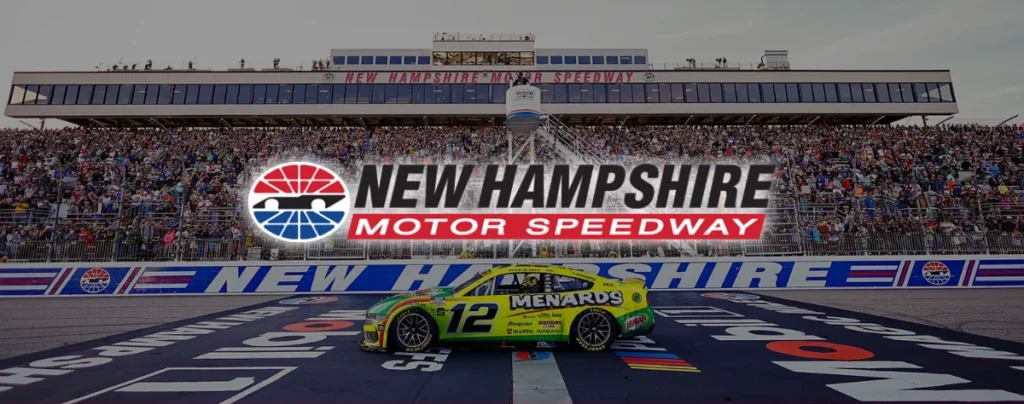 For nearly three decades, one of my favorite summer traditions has been attending the NASCAR race at New Hampshire Motor Speedway. Since 1997, I’ve made the trip to Loudon, New Hampshire almost every year, missing only two races along the way.
Over those years, I’ve watched the sport evolve dramatically. The cars have changed. The technology has advanced. Data analytics have become more sophisticated. Teams have found new ways to gain even the slightest competitive advantage. While most fans focus on the action on the track, I’ve come to appreciate the remarkable parallels between NASCAR and the principles of Lean and continuous improvement.
In many ways, NASCAR is one of the greatest examples of continuous improvement in action.
Winning Is Built on Small Improvements
One of the biggest misconceptions in business is that success comes from a single breakthrough idea or revolutionary change. NASCAR teaches a different lesson.
Races are often won by fractions of a second. Teams spend countless hours improving aerodynamics, refining suspension settings, optimizing fuel strategy, and reducing pit stop times. Rarely does one change create a dramatic advantage. Instead, success comes from hundreds of small improvements that collectively produce better performance.
The same principle applies in our organizations. Lean teaches us that continuous improvement is not about waiting for the next big idea. It’s about making small, incremental improvements every day. Over time, these improvements compound into significant gains in quality, productivity, safety, and customer satisfaction.
The teams that consistently contend for championships understand this. So do the organizations that sustain operational excellence.
Great Teams Depend on Standardized Work
A NASCAR pit stop is one of the most impressive demonstrations of teamwork you’ll ever witness.
Within seconds, a crew changes tires, refuels the car, makes adjustments, and sends the driver back onto the track. Every team member has a clearly defined role. Every movement is practiced repeatedly. Every step follows a standard process.
The goal isn’t to create robots. The goal is to create consistency.
Standardized work provides a foundation for improvement. When everyone performs work the same way, problems become visible and improvements can be measured. Without standards, variation increases and performance becomes unpredictable.
Lean organizations embrace standardized work for the same reason NASCAR teams do: it creates stability, improves quality, and provides the baseline for continuous improvement.
Data Drives Better Decisions
Modern NASCAR teams generate enormous amounts of data during every race weekend.
Sensors monitor tire wear, engine performance, fuel consumption, lap times, temperatures, and countless other variables. Teams use this information to make decisions throughout the race and to improve performance for future events.
The best teams don’t rely on opinions or assumptions. They rely on facts.
This mirrors one of Lean’s most fundamental principles: make decisions based on evidence rather than intuition alone. Effective problem solving begins with understanding the current condition. Data helps us identify gaps, verify root causes, and evaluate whether improvements are actually producing results.
When organizations focus on facts rather than opinions, better decisions follow.
Adaptability Wins the Day
No race unfolds exactly as planned.
Weather changes. Caution flags appear unexpectedly. Tire wear differs from expectations. Competitors try new strategies. Teams must continually assess the situation and adjust accordingly.
The organizations that thrive in today’s environment face similar challenges. Customer expectations change. Markets shift. Supply chains are disrupted. New technologies emerge.
Lean is often misunderstood as a rigid system. In reality, Lean creates the capability to adapt more effectively. Standard processes provide stability, while continuous improvement enables flexibility when conditions change.
The best NASCAR teams and the best organizations share a common trait: they learn quickly and adjust faster than their competition.
Success Is a Team Sport
Drivers receive much of the attention, but no NASCAR driver wins alone.
Behind every successful driver is a team of engineers, mechanics, pit crew members, crew chiefs, spotters, and support personnel working together toward a common goal.
The same is true in business.
Operational excellence is never the result of a single leader, manager, or improvement specialist. Sustainable success comes from engaging everyone in the pursuit of improvement. It requires collaboration, communication, trust, and a shared commitment to achieving better results.
Lean has always been about people. The most successful organizations understand that improvement happens when individuals work together to solve problems and create value.
The Race Never Ends
One of the things I’ve appreciated most after attending races for nearly 30 years is recognizing that the pursuit of improvement never stops.
The checkered flag may end one race, but teams immediately begin preparing for the next one. They review data, analyze performance, identify lessons learned, and search for opportunities to improve.
Continuous improvement works the same way.
There is no finish line for excellence. There is always another process to improve, another problem to solve, another skill to develop, and another opportunity to better serve customers.
Whether on the racetrack or in the workplace, long-term success belongs to those who never stop learning.
As I sit in the stands each summer at New Hampshire Motor Speedway, I still enjoy the speed, strategy, and competition. But I also see something more. I see a living example of continuous improvement in action—a reminder that winning rarely comes from a single moment of brilliance, but from a relentless commitment to getting a little better every day.
And that’s a lesson worth taking from the track to the workplace.




Leave a Comment
Your email address will not be published. Required fields are marked with *