 A Lean Journey
 When we talk about Lean leadership, we often talk about Respect for People. We talk about listening to employees, developing people, creating an environment where problems can be surfaced, and giving people opportunities to improve the work. These are important elements of building a Lean culture. But there is another leadership behavior that deserves more attention: gratitude.
Thanksgiving gives us a natural reminder to be grateful, but gratitude shouldn’t be something we practice only once a year. For Lean leaders, appreciation can become part of how we lead every day. The way we recognize people can reinforce the behaviors we need to build a culture of continuous improvement.
Gratitude Isn’t Just Being Nice
Gratitude in leadership isn’t about handing out compliments or telling everyone they’re doing a great job. It isn’t forced positivity or another corporate program. Effective gratitude is specific, genuine, and connected to something meaningful.
There is a big difference between saying, “Thanks, everyone,” and saying, “I appreciate that you stopped the process when you found that problem. It gave us a chance to understand the cause before it reached the customer.” The second recognizes a specific behavior and explains why it mattered.
That distinction is important because what leaders recognize sends a message about what the organization values. When we recognize people for speaking up, solving problems, helping others, and improving the process, we reinforce those behaviors.
Recognize the Behaviors, Not Just the Results
Organizations naturally celebrate results. We recognize cost savings, quality improvements, productivity gains, successful projects, and improved delivery. Those outcomes matter, but Lean leaders should also recognize the behaviors that made them possible.
Who identified the problem before it became bigger? Who suggested an improvement? Who helped a teammate learn something new? Who had the courage to challenge the current process? Who tried an experiment that didn’t work but helped the team learn?
These behaviors are the foundation of continuous improvement. If we only celebrate successful outcomes, people may become reluctant to experiment, raise concerns, or expose problems. When leaders recognize behaviors that support learning and improvement, they create an environment where people are more willing to participate. That is Respect for People in practice.
Gratitude Starts at the Gemba
The Gemba is often where leaders go to see problems, investigate abnormalities, and understand the current condition. Those are important reasons to go, but our visits should not become a search for everything that is wrong. We should also notice what is working and recognize the people making it happen.
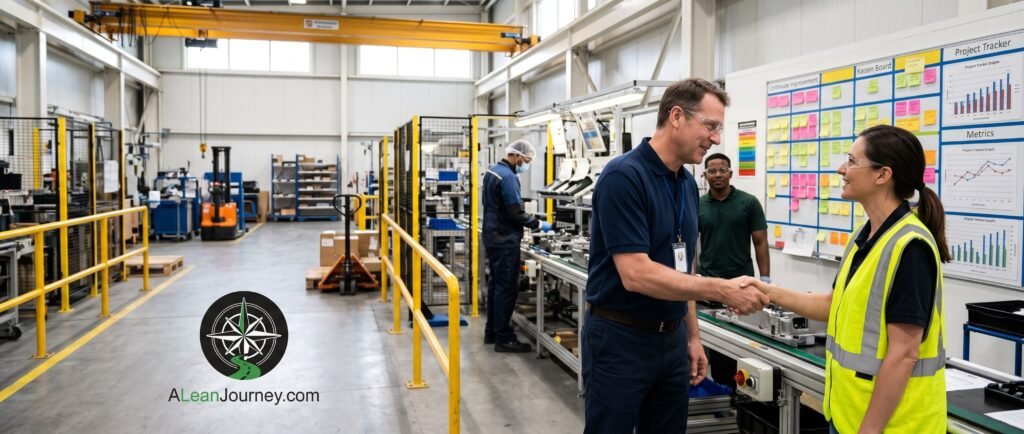
When you see an improvement, ask how it happened, who contributed, and what the team learned. Then recognize those contributions. A simple comment such as, “I noticed you stopped the process when you found that issue. Thank you for making the problem visible,” reinforces an important behavior while showing that the leader is paying attention.
A Gemba walk should be more than an inspection or a hunt for problems. It is an opportunity to learn, coach, understand the work, and appreciate the people doing it.
Don’t Wait for the Big Win
Gratitude doesn’t require a major project or dramatic breakthrough. Some of the most meaningful recognition can happen during ordinary work. Thank someone for speaking up in a meeting. Recognize an employee who helped a colleague. Acknowledge someone who found a better way to do a routine task or took ownership of a problem.
Recognition is most meaningful when it happens close to the behavior being recognized. When people understand what they are being thanked for and why it mattered, the recognition reinforces the behavior and makes it more likely to happen again.
You don’t need a formal award program to do this. Sometimes a sincere thank you, delivered at the right moment, is enough.
Gratitude Builds More Than Morale
It is easy to think of gratitude as simply a way to make people feel good. Its value goes deeper. When people feel that their contributions are noticed and appreciated, they may be more willing to speak up about problems, offer ideas, take ownership, and help one another.
That matters because Lean depends on the knowledge and experience of the people doing the work. A leader can’t see every problem or identify every opportunity. The people closest to the process often know where the issues are and what could make the work better. When those people feel respected and valued, they are more likely to contribute that knowledge.
This is why gratitude belongs in a conversation about Lean leadership. It isn’t separate from Respect for People. It is one way we demonstrate it.
Make Gratitude a Leadership Habit
The goal is to make appreciation part of everyday leadership rather than something reserved for Thanksgiving, annual reviews, or recognition ceremonies. Build it into the routines you already have. During a daily meeting, notice who contributed something valuable. During a Gemba walk, recognize good problem solving. During a kaizen review, acknowledge the people who helped make the improvement possible.
A useful question for leaders to ask is: Who contributed something today that deserves to be recognized?
Then take the time to tell them. Be specific about what you noticed and why it mattered. Over time, those small moments become part of the culture and help shape the behaviors you want to see repeated.
Respect for People Includes Appreciation
Lean leadership is about more than implementing tools and improving processes. It is about creating the conditions where people can contribute, learn, solve problems, and improve the work. That requires listening, coaching, developing people, and appreciating them.
We shouldn’t need Thanksgiving to remind us to be grateful. Every day gives us opportunities to recognize the people who identify problems, improve processes, support their teammates, and help move the organization forward.
Respect for People means more than listening to people and developing people. It also means appreciating people.
Gratitude isn’t just good manners. It is a Lean leadership practice.





Leave a Comment
Your email address will not be published. Required fields are marked with *