 A Lean Journey
 What the Book Is About
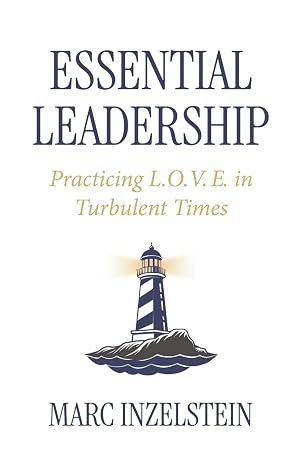
Leadership has never been easy, but today’s leaders face a unique combination of complexity, uncertainty, and relentless pressure. As organizations strive for better results, most leadership books focus on strategy, execution, communication, and organizational systems. Marc Inzelstein’s Essential Leadership: Practicing L.O.V.E. in Turbulent Times takes a different approach. Rather than focusing on what leaders do, Inzelstein asks readers to consider who they are being while they lead.
The central premise of the book is that many leaders have become trapped in a cycle of doing. We work harder, solve more problems, attend more meetings, and take on more responsibilities, believing that greater achievement will eventually lead to fulfillment. Inzelstein challenges this assumption, arguing that effective leadership begins not with doing, but with being. Leaders who are grounded in purpose and self-awareness are better equipped to navigate the challenges and complexities of modern organizations.
One of the most thought-provoking questions in the book is deceptively simple:
Why do you choose to lead?
According to Inzelstein, many leaders have never consciously answered this question. Leadership often becomes a promotion, a responsibility, or simply the next step in a career path. The author encourages leaders to reconnect with their personal purpose for leading and to make leadership a conscious choice rather than an automatic role.
What Lean Practitioners Will Appreciate
Although Essential Leadership is not a Lean book, I found several themes that will resonate with Lean leaders.
The author’s emphasis on self-reflection immediately reminded me of Hansei, the Lean practice of honest reflection and learning. Throughout the book, leaders are encouraged to examine their thoughts, assumptions, reactions, and motivations before attempting to change others.
The book also reinforces a lesson many continuous improvement practitioners eventually learn: organizational transformation begins with leadership transformation. We often focus on improving processes, systems, and metrics, but sustainable improvement requires leaders who are willing to improve themselves as well.
One concept that particularly resonated with me was what I would describe as a “personal gemba walk.” Lean leaders go to the gemba to observe reality firsthand. Inzelstein encourages leaders to observe a different reality—their own internal reactions, fears, assumptions, and habits. Before changing the system around us, perhaps we should spend more time understanding the system within us.
The author’s discussion of control also aligns with Lean thinking. Leaders often exhaust themselves trying to control outcomes and people when their real responsibility is creating the conditions for success. That distinction is central to both Lean leadership and the message of this book.
Where Some Readers May Struggle
Readers looking for a highly tactical leadership book may find portions of Essential Leadership challenging.
This is not a book filled with implementation roadmaps, leadership checklists, or step-by-step improvement methods. The discussion often moves into topics such as awareness, presence, personal growth, and what the author refers to as “being.” Some readers may find these concepts abstract compared to more traditional leadership literature.
However, I believe that is also part of the book’s value. Inzelstein intentionally focuses on a dimension of leadership that is often overlooked in our pursuit of results, productivity, and performance.
Final Thoughts
What I appreciated most about Essential Leadership was its challenge to look inward. Lean leaders spend significant time improving processes, solving problems, and developing others. Inzelstein reminds us that we should devote equal attention to developing ourselves.
While this book was not written specifically for the Lean community, its themes of reflection, personal responsibility, continuous growth, and respect for people will feel familiar to many Lean practitioners. Readers willing to engage with its more reflective approach may find valuable insights that complement the technical and operational aspects of Lean leadership.
For Lean practitioners, this book serves as a reminder that the most important improvement project we will ever lead is our own development as leaders.
Disclaimer
A copy of this book was provided for the purpose of this review.





Leave a Comment
Your email address will not be published. Required fields are marked with *