 A Lean Journey
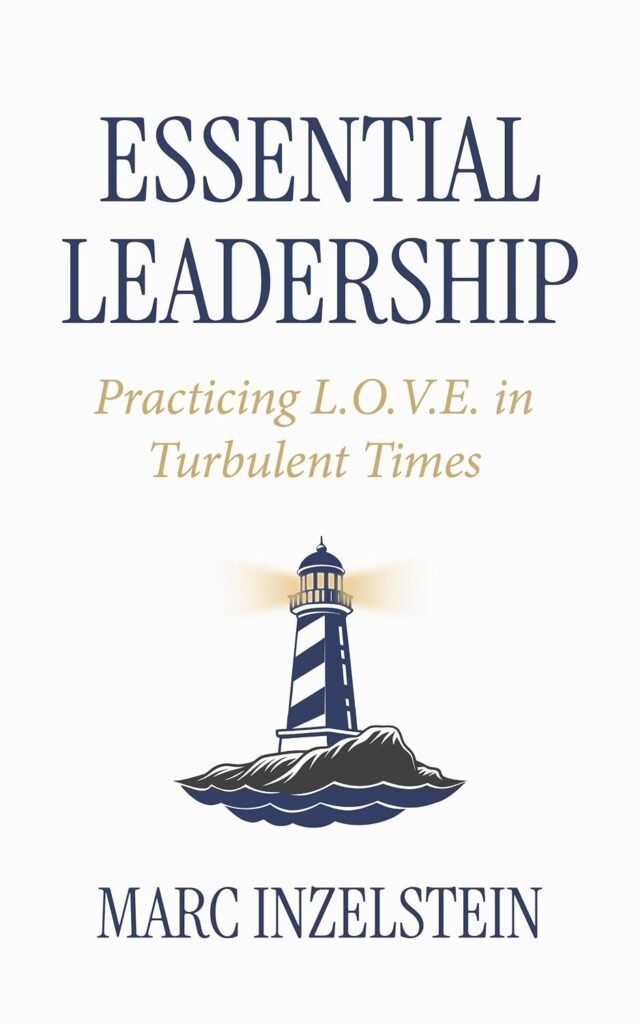 Leadership development often focuses on what leaders should do: set direction, solve problems, improve performance, and develop their people. But what if lasting leadership improvement also depends on something less visible—who leaders are being while they lead? In Essential Leadership: Practicing L.O.V.E. in Turbulent Times, Marc Inzelstein challenges leaders to look inward before trying to change the world around them.
Published in 2026 by Manuscripts LLC, this 264-page book explores the relationship between self-awareness, purpose, and leadership effectiveness. Inzelstein argues that the relentless pursuit of results can trap leaders in a cycle of doing, leaving little time to reflect on their motivations, reactions, and impact on others. He invites readers to consider a fundamental question: Why do I choose to lead?
The book develops its central message through four principles summarized by the acronym L.O.V.E.: Letting Go, Oneness, Vision, and Energy. Letting Go challenges leaders to release the illusion of control and focus on how they respond to circumstances. Oneness emphasizes our interconnectedness and the importance of genuine human connection. Vision encourages leaders to consciously shape the future rather than simply react to immediate demands. Energy explores how a leader’s inner state influences the atmosphere and experiences of the people around them. Together, these principles offer a framework for leading with greater awareness, intention, and humanity.
What I found most valuable is the book’s emphasis on the relationship between personal development and leadership effectiveness. In continuous improvement, we devote considerable attention to improving processes, solving problems, and developing people. Yet leaders can overlook the need to examine their own assumptions, habits, and reactions. Inzelstein’s message reminded me of Hansei, the Lean practice of reflection and learning. Before asking others to change, leaders must be willing to examine themselves. His distinction between controlling outcomes and creating the conditions for success also aligns with Lean leadership’s emphasis on developing people rather than simply directing their work.
The book’s reflective approach is both its strength and its potential limitation. Inzelstein encourages readers to pause, notice their internal responses, and question familiar patterns. These prompts can make the ideas personally meaningful. However, concepts such as being, oneness, and the energy leaders bring into a room can feel abstract, particularly to readers accustomed to concrete tools, measurable outcomes, and step-by-step methods. The book is less a conventional leadership playbook than an invitation to reconsider the foundations from which leadership actions emerge. Readers looking for implementation checklists or immediate operational solutions may need to translate its ideas into practices of their own.
Ultimately, Essential Leadership offers a thoughtful reminder that leadership is not defined solely by decisions, results, or management techniques. It also depends on the awareness, purpose, and relationships that shape those outcomes. I recommend this book to experienced leaders, leadership coaches, and Lean practitioners interested in the human side of organizational improvement. Its greatest value may lie not in providing more answers, but in encouraging leaders to ask better questions—starting with themselves.
Disclaimer
A copy of this book was provided for the purpose of this review.




Leave a Comment
Your email address will not be published. Required fields are marked with *