 A Lean Journey
Lean Quote: Adapt or Fall Behind - Why Continuous Evolution Matters in Lean
- Lean Basics, Lean Quote
- July 24, 2026
On Fridays I will post a Lean related Quote. Throughout our lifetimes many people touch our lives and leave us with words of wisdom. These can both be a source of new learning and also a point to pause and reflect upon lessons we have learned. Within Lean active learning is an important aspect on
READ MORE
Leadership advice is everywhere these days—books, podcasts, seminars, frameworks. Yet many leaders still struggle with the same fundamental challenges: communication breakdowns, lack of accountability, disengaged teams, and slow progress on improvement initiatives. That’s why I appreciate resources that cut through the noise and focus on practical leadership behaviors. One example is the “Modern Leader’s Playbook”
READ MORE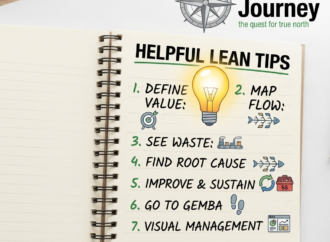
For my Facebook fans you already know about this great feature. But for those of you that are not connected to A Lean Journey on Facebook or Twitter I post daily a feature I call Lean Tips. It is meant to be advice, things I learned from experience, and some knowledge tidbits about Lean to help you along your journey.
READ MOREOn Fridays I will post a Lean related Quote. Throughout our lifetimes many people touch our lives and leave us with words of wisdom. These can both be a source of new learning and also a point to pause and reflect upon lessons we have learned. Within Lean active learning is an important aspect on
READ MORE
What Lean leaders understand about turning artificial intelligence into real business results Every July, National AI Appreciation Day celebrates one of the most transformative technologies of our time. Artificial intelligence has rapidly moved from research labs into our daily lives, helping us write, analyze, communicate, and automate work in ways that seemed unimaginable only a
READ MORE
I’m honored that my article, “Debunking Six Common Misconceptions of Standardized Work,” was recognized by Quality Magazine as the #1 most-read article of Q2 2026. Thank you to the team at Quality Magazine for producing this highlight video and, more importantly, to everyone who took the time to read, share, and discuss the
READ MORE