 A Lean Journey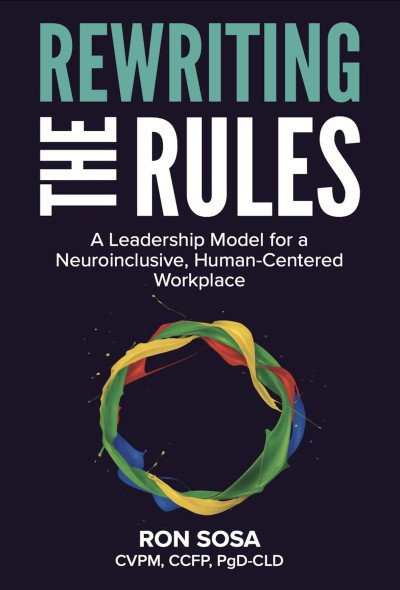
A Review of Rewriting the Rules by Ron Sosa
Leadership books often promise better productivity, stronger teams, or sharper execution. What makes Rewriting the Rules: A Leadership Model for a Neuroinclusive, Human-Centered Workplace different is that Ron Sosa starts with a different question entirely:
What if the problem is not the people, but the systems we built around them?
That framing immediately sets this book apart from traditional management literature. Rather than teaching leaders how to get more out of people, Sosa challenges readers to rethink the assumptions behind professionalism, workplace culture, burnout, communication, and even leadership itself. The result is a thoughtful, deeply personal, and at times challenging book that blends memoir, organizational critique, and practical leadership philosophy.
What the Book Is About
At its core, Rewriting the Rules argues that many modern workplaces were designed around narrow expectations of behavior, communication, emotional regulation, and productivity. These systems often unintentionally reward masking, conformity, and endurance while overlooking people whose brains, experiences, or leadership styles operate differently.
Sosa writes through the lens of neurodiversity, particularly ADHD and autism, but the lessons extend well beyond neurodivergent professionals. The broader message is about designing organizations that are more human-centered, psychologically safe, and sustainable for everyone.
The author draws heavily from his experiences in veterinary medicine, sharing personal stories of burnout, masking, sensory overload, emotional exhaustion, and eventually discovering how deeply traditional leadership expectations conflicted with who he actually was. These experiences become the foundation for the book’s leadership framework called R.I.S.E.:
- Reflect
- Implement
- Sustain
- Empower
Rather than presenting leadership as authority or control, Sosa positions leadership as a relational practice rooted in awareness, inclusion, adaptability, and care.
Where the Book Connects with Lean Thinking
While Rewriting the Rules is not a Lean book, many of its themes strongly align with modern Lean leadership principles.
Lean at its best has always been about respect for people, developing systems that allow individuals to succeed, and creating environments where problems can be surfaced safely. Sosa’s critique of rigid workplace systems echoes a core Lean lesson: when problems repeatedly occur, the issue is often the process or system design, not the individual worker.
The book’s emphasis on reflection also mirrors the Lean practice of hansei — the discipline of self-reflection and continuous learning. Likewise, the focus on sustainability over burnout aligns closely with Lean’s long-term systems thinking philosophy.
One of the strongest parallels is the rejection of “hero culture.” Traditional organizations often celebrate leaders who work the longest hours, absorb the most stress, and appear endlessly resilient. Lean organizations eventually discover that this model creates instability, unevenness, and burnout. Sosa reaches a very similar conclusion through a neuroinclusive leadership lens.
The book also reinforces an important leadership truth: standardization should create clarity and support, not force everyone into identical ways of thinking, processing, or communicating.
What the Book Does Well
The strongest aspect of Rewriting the Rules is its authenticity. Sosa writes with vulnerability and emotional honesty that many leadership books avoid. Readers who have experienced burnout, masking, or feeling “different” in professional environments will likely find parts of the book deeply relatable.
The book is also effective at naming workplace dynamics that often go unspoken:
- performative professionalism,
- emotional suppression,
- sensory overload,
- meeting structures that exclude certain communication styles,
- and leadership expectations that reward visibility more than thoughtful contribution.
Another strength is the practical framing of the R.I.S.E. model. The concepts are accessible and grounded in daily leadership behaviors rather than abstract theory alone. Reflection prompts throughout the book encourage leaders to evaluate their own assumptions and organizational systems.
Importantly, Sosa avoids framing neurodiversity as a weakness to accommodate. Instead, he presents neurodivergent perspectives as valuable sources of insight, creativity, systems thinking, empathy, and innovation.
Where Some Readers May Struggle
Readers expecting a traditional business-management book may find Rewriting the Rules more reflective and advocacy-oriented than operationally prescriptive.
This is not a heavily research-driven or metrics-focused leadership text. The book relies substantially on personal narrative, lived experience, and philosophical discussion. Some readers may wish for more case studies, empirical evidence, or concrete organizational implementation examples.
The writing style is also intentionally emotional and introspective. For some audiences, especially those accustomed to more conventional leadership literature, that tone may feel unfamiliar or overly personal.
Additionally, because the book strongly critiques traditional leadership norms, some readers may initially feel defensive, particularly leaders who succeeded within those systems. But in many ways, that discomfort is part of the point. Sosa is asking readers not simply to improve leadership techniques, but to reconsider the underlying assumptions of workplace culture itself.
Final Thoughts
Rewriting the Rules is ultimately less about neurodiversity alone and more about expanding our definition of effective leadership.
Ron Sosa challenges the idea that professionalism must require emotional suppression, constant performance, or personal self-erasure. He argues instead for workplaces built around regulation, humanity, flexibility, reflection, and sustainable contribution.
Whether readers fully agree with every argument or not, the book raises important questions that leaders should be asking:
- What kinds of people do our systems unintentionally exclude?
- How much talent is lost because organizations reward conformity over authenticity?
- Are our leadership models sustainable for human beings over the long term?
- What would leadership look like if we designed systems around people instead of forcing people to adapt to systems?
For Lean leaders especially, those questions should sound very familiar.
Rewriting the Rules is not a traditional leadership manual. It is a reflective call to rethink the relationship between people, systems, and leadership itself. For readers interested in workplace culture, psychological safety, inclusion, burnout prevention, and human-centered leadership, it offers a thoughtful and timely perspective worth considering.




Leave a Comment
Your email address will not be published. Required fields are marked with *