 A Lean Journey
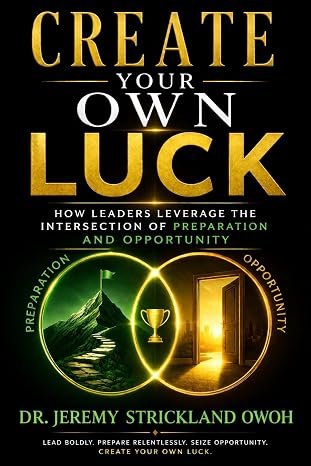
What if what we call luck is actually preparation finally meeting opportunity? That question sits at the heart of Dr. Jeremy S. Owoh’s Create Your Own Luck, a leadership book that challenges readers to stop waiting for the right moment and start preparing for it.
Owoh, an educational leader and superintendent, builds his philosophy around a simple premise: luck is not merely chance. It is the intersection of preparation and opportunity. Throughout the book, he explores intentional leadership, vision, resilience, emotional intelligence, empowerment, and continuous learning. Although the book is written primarily through the lens of educational leadership, many of its lessons extend well beyond the school environment.
The book combines Owoh’s personal leadership experiences with a fictionalized mentoring relationship between Dr. Jay, a seasoned superintendent, and Maya, an aspiring assistant principal. Their conversations provide a narrative thread that makes the leadership lessons more accessible. Maya’s questions and struggles represent the developing leader, while Dr. Jay provides perspective gained through experience. Their relationship also reinforces one of the book’s central ideas: leadership is not simply about reaching a position; it is about developing yourself and others along the way.
Some of the book’s strongest sections are its personal stories. Owoh’s account of becoming trapped in a cycle of reacting to one urgent problem after another is particularly effective. His decision to protect time for planning and reflection illustrates the difference between simply being busy and actually leading with intention. His stories about difficult conversations, failed meetings, resistance to change, and learning from criticism give the book a practical quality that abstract leadership advice often lacks.
The book is also highly actionable. Reflection questions, leadership audits, and a weekly reflection journal encourage readers to move beyond simply agreeing with the author’s ideas. The emphasis on self-awareness, purposeful decision-making, and continuous learning fits well with a broader philosophy of continuous improvement.
There are, however, some weaknesses. The book occasionally repeats its central messages and ideas, and some of the leadership principles—preparation, vision, emotional intelligence, servant leadership, and lifelong learning—will be familiar territory to experienced leadership readers. The narrative and personal stories are strongest early in the book, while some later sections rely more heavily on lists, summaries, and exercises. The educational setting also means some examples will resonate more strongly with educators than with business or operational leaders.
Still, Owoh succeeds in delivering a clear and encouraging message: opportunity favors those who are prepared to recognize and act on it. More importantly, he reminds readers that leadership is not about waiting for permission or a title. It is about showing up, learning, serving others, and intentionally creating the conditions for meaningful impact.
Create Your Own Luck is worth reading for emerging leaders, educators, managers, and anyone thinking about how preparation and mindset shape opportunity. For experienced leaders, the book may not introduce many entirely new concepts, but it provides a useful opportunity to reflect on whether we are actually practicing the principles we already know.
Recommended for readers who believe that the best way to get lucky is to be ready when opportunity arrives.
Disclaimer
A copy of this book was provided for the purpose of this review.




Leave a Comment
Your email address will not be published. Required fields are marked with *