 A Lean Journey
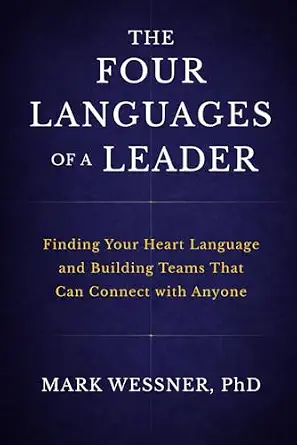
Good leaders know what they want to communicate, but great communicators also recognize how the moment needs to be communicated. That distinction is at the heart of Mark Wessner’s The Four Languages of a Leader, a practical leadership book that explores why even well-intentioned communication can miss its mark.
Wessner’s central idea is that every leader has a “heart language”—a natural way of communicating that feels most authentic and tends to become our default, especially under pressure. He identifies four languages based on two dimensions: Clarity versus Ambiguity and Community versus Individual.
The four languages are:
- Declaration: Providing clarity and direction to a group—”Here is where we stand.”
- Invitation: Connecting with individuals and encouraging personal action—”This can be yours.”
- Exploration: Using questions, stories, and coaching to encourage individual discovery—”What might you discover?”
- Conversation: Creating space for groups to listen, process, and explore together—”Let’s gather and listen.”
The key isn’t determining which language is “best.” Wessner argues that all four have a place. The leadership challenge is recognizing what the situation requires rather than automatically relying on our preferred approach.
That is the book’s greatest strength. The framework is simple enough to remember and practical enough to use. Wessner illustrates each language with examples, reflective questions, and case studies, while also identifying the potential weaknesses of each approach. Declaration can provide needed clarity but become overly directive. Conversation can build trust but become an excuse to avoid decisions. Exploration can create ownership but leave people without sufficient direction.
I also found the idea of building multilingual teams particularly valuable. Wessner argues that leaders don’t need to become equally fluent in all four languages. Instead, they should understand their own strengths and limitations and build teams that collectively provide all four perspectives.
There is an important caveat. The framework isn’t entirely new; Wessner openly acknowledges that it builds on Robert Stephen Reid’s The Four Voices of Preaching and other communication research. The contribution here is applying those concepts to leadership and organizational settings. Readers looking for extensive empirical research may also find the book more practical than academic.
From a Lean perspective, I see a strong connection to Respect for People. Lean leaders must know when to provide direction, when to coach, when to ask questions, and when to listen. Wessner’s framework reinforces the idea that effective leadership isn’t about having one perfect communication style. It is about understanding the situation and choosing the approach that best serves the people and purpose involved.
The Four Languages of a Leader is a short, accessible book that gives leaders a useful vocabulary for something many of us experience but don’t always recognize: communication mismatch.
I would recommend it to leaders, managers, coaches, and anyone responsible for leading teams or navigating organizational change. The question Wessner leaves readers with is a good one to carry into our next leadership conversation:
What language does this moment require—and am I prepared to speak it?
Disclaimer
A copy of this book was provided for the purpose of this review.





Leave a Comment
Your email address will not be published. Required fields are marked with *