 A Lean Journey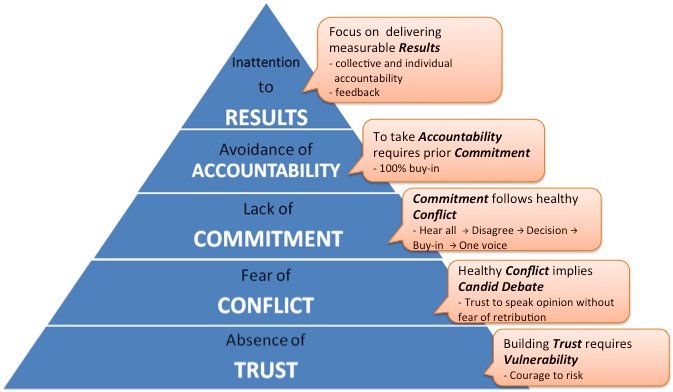
The Five Dysfunctions of a Team summary is based on the leadership book The Five Dysfunctions of a Team by Patrick Lencioni. This book is widely regarded as essential reading for managers, leaders, and professionals who want to understand why teams struggle—and how to fix it.
At its core, the book explains that team failure is rarely caused by a lack of talent. Instead, it stems from behavioral issues and unresolved team dysfunctions in the workplace that prevent teams from working cohesively and delivering strong results.
Understanding Team Dysfunctions in the Workplace
Lencioni identifies five interconnected dysfunctions that weaken teams when left unaddressed. These dysfunctions form a hierarchy, meaning each level depends on the one beneath it.
The Five Dysfunctions Explained
| Dysfunction | What It Means | Impact on the Team |
| Absence of Trust | Team members are unwilling to be vulnerable or admit mistakes | Fear of asking for help, defensive behavior |
| Fear of Conflict | Teams avoid healthy debate and honest discussion | Artificial harmony, poor decisions |
| Lack of Commitment | Decisions lack clarity or buy-in | Hesitation, second-guessing |
| Avoidance of Accountability | Team members hesitate to hold peers accountable | Missed deadlines, low standards |
| Inattention to Results | Focus shifts to personal success over team success | Poor outcomes, reduced performance |
These team dysfunctions in the workplace often appear subtle but compound over time, leading to disengagement and underperformance.
How to Build Trust in a Team
Trust is the foundation of every high-performing team. Without trust, productive conflict and commitment cannot exist.
Practical Ways to Build Trust
| Trust-Building Action | Result |
| Encourage vulnerability | Stronger collaboration |
| Normalize mistakes | Psychological safety |
| Promote open communication | Reduced defensiveness |
| Lead by example | Higher credibility |
Learning how to build trust in a team allows members to engage in honest discussions, challenge ideas, and move forward with confidence.
Effective Team Leadership Skills That Prevent Dysfunction
Strong leadership is essential to addressing dysfunction early. Leaders must actively shape team culture rather than assume it will develop on its own.
Core Leadership Skills That Matter
| Leadership Skill | Why It’s Important |
| Conflict facilitation | Encourages healthy debate |
| Clear communication | Drives commitment |
| Accountability setting | Maintains standards |
| Results alignment | Keeps focus on team goals |
These effective team leadership skills help create clarity, alignment, and responsibility across the team.
Improving Team Performance at Work
When trust, conflict, commitment, and accountability are working together, teams naturally perform better.
How Functional Teams Perform
| Functional Behavior | Performance Outcome |
| Open discussion | Better decisions |
| Clear expectations | Faster execution |
| Peer accountability | Higher quality work |
| Results-first mindset | Sustainable success |
By addressing dysfunctions and reinforcing positive behaviors, organizations can make measurable progress in improving team performance at work.
Final Thoughts
Dysfunctional teams are common—but they are not permanent. By understanding the Five Dysfunctions of a Team summary, leaders and team members can identify weak points, change behaviors, and create a culture built on trust, accountability, and results.
The process may be uncomfortable at times, but the outcome is worth it: stronger collaboration, healthier leadership dynamics, and better business results.








Leave a Comment
Your email address will not be published. Required fields are marked with *