 A Lean Journey
Quality plays a critical role in every aspect of business performance. In today’s competitive environment, a strong quality excellence culture is no longer optional—it is a defining factor that separates sustainable organizations from those that struggle with customer trust, operational inefficiencies, and rising costs.
Quality is not limited to products or services alone. It extends across people, processes, suppliers, and decision-making systems that collectively shape long-term business outcomes.
Cost of Poor Quality
The cost of poor quality affects organizations at multiple levels. Defects, rework, customer complaints, and reputation damage increase expenses while reducing growth opportunities. These costs often remain hidden until they directly impact customer loyalty and revenue.
Business Impact of Poor Quality
|
Area Affected |
Impact on Organization |
|
Customer Experience |
Increased complaints, reduced satisfaction |
|
Operational Costs |
Higher rework, warranty, and support expenses |
|
Revenue |
Lost sales due to delayed purchases |
|
Brand Reputation |
Negative reviews and reduced trust |
|
Market Share |
Competitors gain advantage |
Poor quality detected later in the process is significantly more expensive to correct. As customer confidence declines, organizations are forced to allocate more resources to support and damage control instead of innovation and growth.
Business Quality Management as a Strategic Foundation
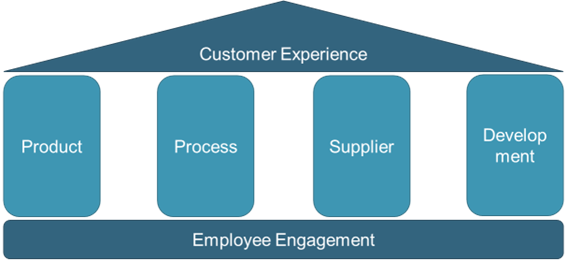
Effective business quality management provides the structure needed to prevent defects, control risk, and ensure consistent performance. A quality-focused organization integrates quality principles into daily operations rather than treating them as an afterthought.
Core Elements of Business Quality Management
|
Quality Element |
Focus Area |
|
Customer Quality |
Satisfaction, feedback, and value delivery |
|
Product Quality |
Performance consistency and defect prevention |
|
Process Quality |
Standardization and process discipline |
|
Supplier Quality |
Reliable and collaborative supply chain |
|
Development Quality |
Risk reduction through controlled product development |
These elements work together to create stability while allowing flexibility for continuous improvement.
Customer Driven Quality and Value Perception
Customer-driven quality is defined by how customers perceive value over time. Quality expectations evolve as products mature and competitors introduce alternatives. What is considered acceptable today may not meet expectations tomorrow.
Customer perception of quality is influenced by:
- Reliability and performance
- Responsiveness to issues
- Consistency across interactions
- Trust in the brand
Organizations that actively monitor customer feedback and adapt accordingly are better positioned to maintain relevance and loyalty.
Continuous Quality Improvement Through Culture
Continuous quality improvement cannot be achieved through inspection alone. Quality must be built into processes from the beginning and supported by employees at every level.
Quality is:
- Not a single project
- Not the responsibility of one department
- Not something added at the end of production
Sustainable improvement occurs when employees share responsibility for identifying risks, improving processes, and enhancing outcomes on an ongoing basis.
Building a Sustainable Quality Excellence Culture
A true quality excellence culture is built on engaged employees, disciplined processes, and leadership commitment. When quality becomes part of the organizational mindset, businesses experience long-term benefits beyond compliance or short-term gains.
Organizational Benefits of Quality Excellence
|
Benefit |
Business Outcome |
|
Customer Loyalty |
Increased repeat business |
|
Brand Strength |
Improved market position |
|
Cost Efficiency |
Reduced waste and rework |
|
Talent Attraction |
Strong employer reputation |
|
Business Growth |
Sustainable performance improvement |
Organizations that embed quality into their culture gain the ability to solve complex challenges while continuously raising their standards.
Conclusion
Quality excellence is a long-term commitment that requires patience, consistency, and shared ownership. Through strong business quality management, a focus on customer driven quality, and a mindset of continuous quality improvement, organizations can reduce the cost of poor quality and build a culture that supports sustainable success.
A comprehensive quality approach is not just a competitive advantage—it is a foundation for long-term organizational longevity and pride.









Leave a Comment
Your email address will not be published. Required fields are marked with *